

under the patronage of St Joseph
and St Dominic
By the rivers of Babylon there
we sat and wept, remembering Zion;
on the poplars that grew there we hung up our harps. . . Ps 136
|
under the patronage of St Joseph
and St Dominic
By the rivers of Babylon there
we sat and wept, remembering Zion; |
|
|
|
EXPLAINING THE VOYAGER DISASTERThe collision of the destroyer HMAS Voyager with the aircraft carrier HMAS Melbourne occurred just over sixty years ago. The writer has long been exasperated over the failure of two Royal Commissions, the first in 1964, the second in 1967, to identify the cause of the collision when, if justice had been accorded the evidence of Lieutenant Commander (Retired) Peter Cabban, there was sufficient to establish its cause on the balance of probabilities and, arguably, beyond a reasonable doubt. That evidence was published in full in 2005 in Cabban’s book, written with David Salter, Breaking Ranks. The present paper seeks to spell out the implications. more Review of How
the Universe Operates
|
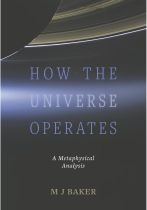
LAUNCH OF BOOK 'HOW THE UNIVERSE OPERATES'How the Universe Operates was launched by UK publishers Austin Macauley on December 8th 2023. A link to the publisher’s website is here. The book is featured on Amazon here. It may be purchased either in Kindle or paperback editions at good booksellers or via amazon.com or amazon.com.au |
 |
In 1993 the late Fr Paul Mankowski published an incisive criticism of the dissent to Humanae Vitae. That dissent did not arise spontaneously. It was precipitated by the scandal committed by the bishops of Vatican II in dissenting from the Church's teaching which Council had concluded less than three years prior. more
Here is a commentary on the late Pope Benedict's last Address to priests of the Diocese of Rome. more
This is an extract from one of the many audiotapes of the late Fr Gregory Hesse S.T.D., S.J.D. more
A passing comment of St Thomas in his Summa Contra Gentiles seems to confirm a view expressed in the booksize paper How the Universe Operates on our website. more
For our edification St Thomas exposed in his writings just how dependent we are on God at every moment of our earthly existence. more
Today marks the 120th anniversary of the death of Pope Leo XIII and the twentieth anniversary of this website. It is appropriate for us to provide a report on those years of operation. Regrettably things have not got better but worse not only for the Catholic faithful but for society generally. Despite the chaos that marks the current governance of God's Holy Church as a result of the abdication of Catholic in favour of Modernist principle on the part of Pope and bishops, the Holy Spirit is still running the show. We take the opportunity to renew our faith in Him and His providence confident that His permission of the evils will result in the much greater good that He will elicit from them when the time is appropriate. more
The meaning of 'heaven' is hidden in our English translation of its usage in the original texts which are rendered in Latin by St Jerome. It seems to have two different meanings. more
The thinkers who followed, some 50 to 100 years after the event, the revolt of German and English Catholics against God and His Holy Church, sought to defend its inchoate atheism. Today we are suffering the appalling effects of the irrationality in which they engaged. That those effects are worse than they might have been we owe to the systematic abrogation of their responsibilities by the bishops of the Catholic Church. more
Did the priest responsible for the 'big bang' thesis reflect the teachings of God's Holy Church when he offered his suggestion on the beginnings of the universe? more
We publish here a further extract from historian Henry Sire’s Phoenix from the Ashes (Kettering OH, Angelico Press, 2015, pp. 93-100) to aid the Catholic faithful in their defence of the faith against the Protestant and atheistic impositions.
Galileo was a man whom, in today’s argot, we would describe as possessed of attitude, i.e., truculence or pig-headedness. He was a good scientist but had a higher opinion of himself and his views than reality allowed. He was also dishonest. Had it not been discovered, long after the events that saw him marginalised by the Catholic Church, that his opinion was close to the truth uncovered by Sir Isaac Newton 55 years later, and that his condemnation could conveniently be used as a stick with which to beat the Church, his intemperateness might have attracted the obloquy it deserved. Sire identifies the issues in this way: “A clash between impudent folly and pompous autocracy has… been misrepresented as a conflict between science and religion”. more
Dr Chris Decaen of Thomas Aquinas College has a splendid article on the topic on the College's website here:
https://www.thomasaquinas.edu/news/dr-chris-decaen-lecture-galileo-church
Phoenix from the Ashes - The Making, Unmaking, and Restoration of Catholic Tradition by H J A Sire [Kettering, Ohio, Angelico Press http://angelicopress.com/sire-phoenix-from-the-ashes , 2015] is as admirable as it is timely. Here is a review of this important book. more
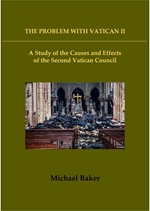
THE PROBLEM WITH VATICAN IIThis is a book length pdf file comprised of various papers published on superflumina on the vexed topic of the Second Vatican Council. The reader can download it freely. He can navigate via the Index to any of its chapters. He can have his computer read the text aloud while he labours at some task in the house, or as he drives the car. It is hoped to produce it in several additional ebook formats in due course.This is a revised and shortened version of the original publication. more |
 |
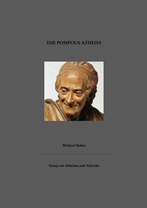
THE POMPOUS ATHEISTThis ebook addresses the endemic modern problem of atheism—belief in no-God. Atheists assert that they are above superstition, the ‘superstition’ of religious belief, but it is not true. Not only are they believers, they are believers without the slightest evidence of that in which they believe. They are the real exponents of ‘religious liberty’ for they insist on the freedom to believe there is no God. Their every action involves acceptance of causation. But, obsessed with an idea, they choose to deny causations’s reality when it comes to their own essence and existence. In this series of essays we have endeavoured to make it plain just how stupid is the atheistic thesis.It is reasonable to believe in God, no matter how confused one’s belief may be. The fundamental issues are these: 1. I did not bring myself into existence; 2. I do not keep myself in existence; 3. in this world of reality I am one of the privileged beings for not only do I know singular things, like brute animals, but I know their very natures; 4. nothing exists without an adequate cause—and that includes me! Moreover, 5. the one who caused me must be living and intellectual, as I am living and intellectual—but an immensely greater being. It is hoped that the presentation of these essays will assist the reader in resisting the temptation to embrace the atheistic virus. more |
 |
See the complete set of lessons here