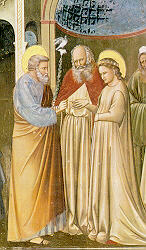


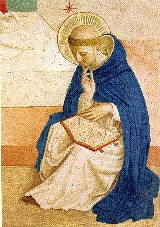
under the patronage of St Joseph and St Dominic
By the rivers of Babylon there
we sat and wept, remembering Zion;
on the poplars that grew there we hung up our harps. . . Ps 136
|
under the patronage of St Joseph and St Dominic By the rivers of Babylon there
we sat and wept, remembering Zion; |
|
|
MATER POPULI FIDELIS – THE ATTACK ON THE MOTHER OF GOD
PART I – THE CATHOLIC CHURCH’S TEACHING[1]
And the Lord said to the serpent: because thou hast done this thing thou art cursed among all cattle… I will put enmity between thee and the Woman, between thy seed and her seed… Genesis 3
And the wine failing, the Mother of Jesus said to Him: they have no wine. And Jesus said to her: Woman, what is that to me and to thee… [And she] said to the servants: Whatsoever He tells you to do, do it! John 2
Download this document as a
In the recent ‘doctrinal note’ on the Blessed Virgin, Mater Populi fidelis, Pope Leo XIV teaches this proposition— “Given the necessity of explaining Mary’s subordinate role to Christ in the work of Redemption, it is always inappropriate to use the title “Co-redemptrix” to define Mary’s cooperation.” (22) He teaches, additionally, that while— “Mary carries out a unique activity to help us open our hearts to Christ and to his sanctifying grace, which elevates us and heals us… the title “Mediatrix of All Graces” risks presenting Mary as the one who distributes spiritual goods or energies apart from our personal relationship with Jesus Christ.” (68, 70)
These propositions denigrate the essential part Our Blessed Lady played in Christ’s redeeming work and misstate the Catholic Church’s teaching comprehensively. As we will show, later, the attitude it displays reflects the Pope’s immersion in the poison of the Modernist heresy.
The Church’s Constant Teaching The teaching of the Catholic Church on Christ’s Mother, the part she played in our Redemption and her unique relationship with the Blessed Trinity, has developed over seventeen hundred years. It was summarised succinctly by Pope Pius X in his encyclical Ad illum diem (February 2nd, 1904) celebrating the, then approaching, fiftieth anniversary of the proclamation of the Doctrine of the Immaculate Conception, in the following terms.
“When the supreme hour of the Son came, beside the Cross of Jesus there stood Mary His Mother, not merely occupied in contemplating the cruel spectacle, but rejoicing that her Only Son was offered for the salvation of mankind, and so entirely participating in His Passion, that if it had been possible, she would have gladly borne all the torments that her Son bore (St. Bonav. 1. Sent d. 48, ad Litt. dub. 4). And from this community of will and suffering between Christ and Mary she merited to become most worthily the Reparatrix of the lost world (Eadmeri Mon. De Excellentia Virg. Mariae, c. 9), and Dispensatrix of all the gifts that Our Saviour purchased for us by His Death and by His Blood. “It cannot, of course, be denied that the dispensation of these treasures is the particular and peculiar right of Jesus Christ, for they are the exclusive fruit of His Death, who by His nature is the Mediator between God and man. Nevertheless, by this companionship in sorrow and suffering… between the Mother and the Son, it has been allowed to the august Virgin to be the most powerful mediatrix and advocate of the whole world with her Divine Son (Pius IX, Ineffabilis Deus). The source, then, is Jesus Christ “of whose fulness we have all received” (John i: 16), “from whom the whole body, being compacted and fitly joined together by what every joint supplies, according to the operation in the measure of every part, maketh increase of the body unto the edifying of itself in charity” (Ephesians iv., 16). But Mary, as St. Bernard justly remarks, is the channel (Serm. de temp on the Nativ. B. V. De Aquaeductu n. 4); or, if you will, the connecting link whose function is to join the body to the head and transmit to the body the influences and volitions of the head—We mean the neck. Yes, says St. Bernardine of Sienna, “she is the neck of Our Head, by which He communicates to His mystical body all spiritual gifts” (Quadrag. de Evangel. aetern. Serm. x., a. 3, c. iii.). “We are then, as will be seen, very far from attributing to the Mother of God a productive power of grace—a power which belongs to God alone. Yet, since Mary exceeds all others in holiness and in union with Jesus Christ, and has been associated by Jesus Christ in the work of Redemption, she merits for us de congruo - in the language of the theologians - what Jesus Christ merits for us de condigno, and she is the supreme Minister of the distribution of graces. Jesus “sits on the right hand of the majesty on high” (Hebrews i: 3.). Mary sits at the right hand of her Son - a refuge so secure and a help so trusty against all dangers, that we have nothing to fear or to despair of under her guidance, her patronage, her protection. (Pius IX, Ineffabilis Deus).” Ad Diem Illum nn. 12-14
By reason of her creation as Mother of God, Mary is the most perfect of God’s creatures. She enjoys, as St Thomas teaches, a certain infinite dignity. God could not, he teaches, have created a better creature than Mary.[2] Ordained, from all eternity, to be Daughter of God the Father, Spouse of God the Holy Spirit, Mother of God the Son, she is at the heart of the Blessed Trinity.
Her utterly unique vocation grounds her titles Co-Redemptrix and Mediatrix of graces.
Co-Redemptrix Redemption has two aspects, objective and subjective. The thing itself—the objective Redemption—was achieved in time on Good Friday two thousand years ago. The making of its effects available to those of the faithful who embrace them—the subjective Redemption—occurs, will occur, moment by moment, in all time thereafter to the world’s end. How did Our Blessed Lady co-operate in the objective Redemption? She did so, first, by the Incarnation itself, for it is only through her that the new Adam received the human nature which made Him the High Priest able to offer the sacrifice of our Redemption. She gave Him the body He would offer on Good Friday.
But she did something more on that Friday, something even more profound. She cooperated with Her Son by consenting to His death. God asked that she freely choose that her Son die in order to save the world. He asked her to will that—to choose that—as the way He had ordained the human race would be restored to the family of God. And she did so. She offered her Son at the same time as He offered Himself in a perfect union of wills: it was a joint offering. She acted not merely as a private person, the mother of this particular Man, but in her official capacity as ‘the new Eve’ cooperating with the new Adam. Thus, Mary’s act was an essential part of the objective Redemption.
Of
course her offering was not enough in strict justice to pay
for the salvation of the world.
Only Our Lord’s offering was sufficient.
However, because of her unique holiness and the unique
degree of her charity, her offering was as much as any merely
human person could make to pay the debt incurred by Adam’s
sin. Thus, the plan of
God for mankind’s Redemption was that it would be paid by a
joint payment made by two representatives of the human race;
Just as Eve had played an important, indeed necessary, part in Adam’s disobedience, Mary, the new Eve, played an important, and necessary, part in the work of its reparation.
Note the parallel: Eve was involved intimately in Adam’s act which precipitated the fall; Mary was involved intimately in Christ’s act of redeeming us from its consequences. With admirable congruence, the Almighty saw to it that the circumstances which attended the Redemption should reflect those which had attended the Fall.
Pius IX summarised the teaching of the Church Fathers in his Bull proclaiming the doctrine of the Immaculate Conception, Ineffabilis Deus— “[T]he most glorious Virgin was Reparatrix of the first parents, the giver of life to posterity… she was chosen before the ages, prepared for Himself by the Most High, foretold by God when He said to the serpent, I will put enmity between thee and the woman.” The reward due to Christ was due in strict justice: this was condign merit; merit de condigno. Mary offered her sufferings in union with those of her Son and merited, in contrast, a reward de congruo, something not strictly due but befitting God’s generosity towards the Mother of His Son without whose cooperation Christ could not have served the Divine purpose. Mary played an essential part in all the meriting and is, therefore, justly described as ‘Co-Redemptrix’.
Protestant William Wordsworth described her, and rightly, as ‘Our tainted nature’s solitary boast’.[3]
Mediatrix of graces This title follows on Our Lady’s entitlement to be called Co-Redemptrix. Because she merited with her Son all the graces of the Redemption, it is fitting that she should play a part in their distribution and just as the Redemption was universal so is the ambit of her mediation.
That Our Lord was the new Adam is clear from sacred scripture – Romans ch. 5; I Corinthians ch. 15. Very soon after the death of the last Apostle the Fathers of the Church, the voices of tradition, began comparing Our Lady to the new Eve. In Genesis 3: 15 we have God speaking to the serpent: “I will put enmity between thee and the woman”. The Church Fathers identified “the woman” as Our Lady. This interpretation is officially sanctioned by the Church in the definition by Pius IX of the Immaculate Conception in the nineteenth century and that by Pius XII of the Assumption in the twentieth.
We know that each of the saints in heaven exercises a certain mediation with God. It is part of our faith that we are permitted to ask their aid to obtain certain graces for us. But Our Lady’s mediation differs from theirs because she was there - on Calvary – the new Eve, co-operating in the objective Redemption in a way that no other saint could. The Church’s Fathers and Doctors insist that it was fitting that, as Mary was intimately involved in the objective Redemption, she is as intimately involved in the distribution of its fruit. St Bernard (+ 1153) speaks at length about Our Lady’s role as Mediatrix. St Bernadine of Siena (+ 1444) speaks of her as Mediatrix, and the term Co-Redemptrix dates from his time.
In the nineteenth century the Popes began to endorse these titles, Co-Redemptrix and Mediatrix. The natural meaning of words uttered by Pius IX and Leo XIII is that Mary cooperated in the objective Redemption, and both clearly teach about Our Lady being Mediatrix. Any doubt that one might have about the force of what they had to say was resolved by the teaching of their successor, the only saint among the popes of the Catholic Church in 400 years, Pius X, in Ad Illum Diem cited above. It is confirmed in innumerable pronouncements of his successor, Pius XII.
This truth that Our Blessed Lady is Mediatrix of graces is borne out by innumerable reports of her appearances to members of the faithful, especially in the period since the great revolt against God in the sixteenth century, to admonish the faithful, to urge penance and reparation for sin and warn of the eternal consequences of failure.
That she holds this position, and title, is of the essence of the doctrine of St Louis Marie de Montfort in the seventeenth and early eighteenth centuries, as of her revelations to St Catherine Labouré in 1830 and their fruit, the Miraculous Medal worn by so many Catholics. It is of the essence of her revelation to St Bernadette at Lourdes in 1858 which confirmed Pius IX’s definition of her as the Immaculate Conception four years prior. These evidences were reinforced by her appearances to the children at Fatima in 1917.
Our Blessed Lady has a battle cry for all the followers of her Son. She uttered it to the servants at the wedding feast of Cana— Whatsoever He tells you to do, do it!
Michael Baker February 18th, 2026—Second Sunday after the Epiphany [1] The writer acknowledges his debt to Fr Daniel Themann SSPX for his analysis of the issues in a sermon at Holy Cross Church, Inveralochy, New South Wales, on Sunday, November 16th, 2025. [2] Cf. Summa Theologiae I, q. 25, a, 4. This fascinating article considers the question: “Whether God can do better than He does?” [3] The Virgin, a sonnet
|
 PDF
PDF